Receiving 1099 income can make the mortgage process feel frustrating when most applications seem designed…
Can We Finance a Non-Warrantable Condo as a Primary Residence?
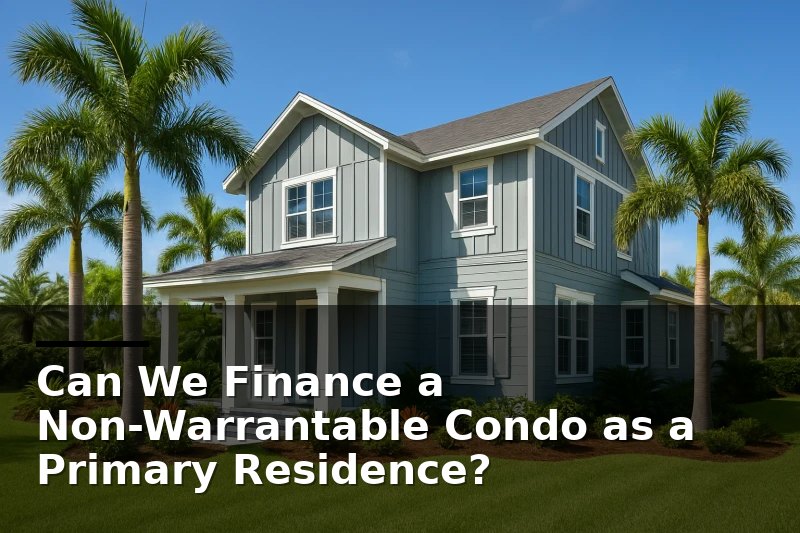
Finding the right condo can be frustrating when the unit looks financeable but the condominium project doesn’t meet traditional lending guidelines.
Yes, a non-warrantable condo can often be financed as a primary residence through a portfolio or Non-QM loan, although the down payment, documentation, property review, and reserve requirements may be different from conventional financing.
In this guide, I’ll explain what makes a condo non-warrantable, which financing options may be available, and what buyers should review before moving forward.
Key Takeaways
- Financing: Non-warrantable condos may qualify through portfolio or Non-QM lenders that use their own project guidelines.
- Property Review: The lender will evaluate both the individual borrower and the financial, structural, legal, and insurance condition of the condominium project.
- Primary Residence: Occupying the unit as your primary home may provide more financing options than purchasing it as an investment property, but occupancy does not eliminate project requirements.
- Timeline: Condo document review can add time to the loan process, especially when the association must provide updated financial or structural information.
- Best For: This financing can help qualified buyers who have found an acceptable unit in a project that does not meet standard agency guidelines.
Quick Answers
- Can a non-warrantable condo receive mortgage financing? Yes. Financing may be available through a portfolio lender, credit union, bank, or Non-QM program.
- Why would a condo be considered non-warrantable? Common reasons include inadequate association reserves, insurance concerns, pending litigation, investor concentration, commercial space, structural issues, or incomplete construction.
- Can I use a standard conventional loan? Usually not if the project fails the applicable Fannie Mae or Freddie Mac review, although the exact outcome depends on the issue and the type of project review.
- Does primary-residence occupancy make approval automatic? No. It may improve the available options, but the borrower, unit, and condominium project must still meet the lender’s guidelines.
I’m Miguel Romero (NMLS# 625680), a mortgage broker with 18 years of experience, and I regularly review scenarios where the property does not fit the traditional lending box. The first step is identifying why the condo is non-warrantable because that reason usually determines which financing paths are realistic.
What Is a Non-Warrantable Condo?
A non-warrantable condo is a unit in a condominium project that does not meet the eligibility standards required for a standard loan sold to Fannie Mae or Freddie Mac. The term describes the project, not necessarily the quality of the individual unit or the buyer’s financial qualifications.
This distinction matters because condo financing involves two separate approvals:
- Borrower approval: The lender reviews credit, income, assets, debts, occupancy, and the requested loan terms.
- Property and project approval: The lender reviews the unit and the condominium association, including its budget, insurance, ownership concentration, legal issues, and physical condition.
A borrower may have strong credit, stable income, and sufficient funds but still be unable to use conventional financing because the project itself does not qualify. The opposite can also happen: a warrantable project may be acceptable, but the borrower may not meet a particular loan program’s requirements.
Why Does a Condo Become Non-Warrantable?
There is no single reason a project becomes non-warrantable. Some issues are temporary and may be corrected by the association. Others are part of the project’s design, ownership structure, or financial condition.
Association Budget or Reserve Concerns
Lenders review whether the association collects enough income to cover normal expenses and prepare for major repairs. A weak budget, significant delinquent dues, or insufficient reserves can raise concerns about future assessments and the project’s long-term financial stability.
Florida condominium reviews may also involve milestone inspections, structural reserve studies, and related association records when applicable. Requirements can vary based on the building, its location, its age, and current state law.
Insurance Problems
The condominium association generally needs acceptable master insurance coverage. A lender may review property coverage, liability insurance, flood insurance when applicable, deductibles, exclusions, and any available information about replacement cost.
Insurance has become a significant part of condo financing in Florida. A policy may exist but still fail a lender’s requirements because of coverage limitations or a deductible that falls outside that lender’s guidelines.
Pending Litigation or Structural Concerns
Litigation does not automatically make every condo ineligible. The lender will usually look at what the lawsuit involves, the potential financial exposure, available insurance coverage, and whether the matter affects the safety or marketability of the property.
Structural concerns, deferred maintenance, mandatory repairs, or an evacuation order generally require a more detailed review. Some conditions may be unacceptable even to lenders that finance other non-warrantable projects.
Ownership and Use Restrictions
A project may fall outside agency standards because one person or business owns too many units, too many units are rented, the project operates like a hotel, or short-term rental activity is a major part of its operation. Excessive commercial space may also affect eligibility.
These factors matter because lenders evaluate whether the property functions primarily as a residential condominium and whether individual units are reasonably marketable.
New or Incomplete Projects
A newly constructed project may be non-warrantable if construction is incomplete, the developer still controls the association, too few units have been sold, or required project documents are not finalized. Financing may still be possible, but the lender may use a program specifically designed for new or non-warrantable projects.
How Can You Finance a Non-Warrantable Condo?
Non-warrantable condo financing commonly comes from lenders that keep the loan in their own portfolio or sell it to private investors with different project standards. These programs do not ignore risk. They evaluate it differently and may accept conditions that agency financing does not.
| Financing Type | Project Review | Typical Considerations |
|---|---|---|
| Conventional agency loan | Must meet applicable Fannie Mae or Freddie Mac standards | May offer favorable terms but provides less flexibility for project defects |
| Portfolio loan | Uses the financial institution’s internal guidelines | May allow certain non-warrantable conditions with additional documentation |
| Non-QM loan | Uses investor-specific condo and borrower guidelines | May provide flexible income documentation and project eligibility standards |
| Cash purchase followed by financing | Project is reviewed during the later financing request | Does not guarantee the property will qualify for delayed financing or a refinance |
Guidelines, rates, fees, and down payment requirements vary by lender and scenario. A non-warrantable condo loan may require a larger investment, stronger reserves, or different pricing than a standard conventional loan. Current information should be verified before making an offer.
Does Buying the Condo as a Primary Residence Help?
Primary-residence occupancy can help because lenders often view an owner-occupied purchase differently from a second home or investment property. Some programs allow more favorable terms or broader eligibility for a primary residence.
However, occupancy only addresses one part of the loan. It does not resolve inadequate insurance, serious structural problems, unacceptable litigation, or other project-level concerns.
The lender may also require evidence that you intend to occupy the property as your principal residence. This is based on the complete loan file, including your current housing situation, employment location, and other relevant facts. Occupancy must always be represented accurately.
What Documents Will the Lender Review?
A non-warrantable condo review often requires more documentation than a detached single-family home. The exact list varies, but the lender may request:
- Condominium questionnaire
- Current association budget
- Recent financial statements
- Master insurance policies
- Flood insurance information, when applicable
- Association bylaws and declarations
- Meeting minutes
- Details about pending litigation
- Special assessment information
- Engineering reports or structural inspections
- Reserve studies or milestone inspection records
- Information about commercial space and unit ownership
The association or its management company normally provides many of these documents. Delays can occur when records are incomplete, outdated, or unavailable, so requesting them early can protect the financing timeline.
Income Documentation Is a Separate Decision
Non-warrantable status relates to the condominium project. It does not automatically mean the borrower needs alternative income documentation.
A salaried borrower might qualify through a full-documentation portfolio program. A business owner may need a different approach if tax returns do not reflect current cash flow. Depending on the scenario, a bank statement mortgage program or a 1099 and profit-and-loss program may be considered.
The challenge is finding one program that accepts both the borrower’s income documentation and the condominium project’s specific issue. A lender that allows bank statements may not accept the project, while a lender that accepts the project may require traditional income documentation.
What Should You Do Before Making an Offer?
A standard pre-approval reviews the borrower, but it may not confirm that a specific condo project qualifies. If you are considering a condo in Coral Springs, Parkland, Fort Lauderdale, Boca Raton, or another South Florida market, ask about the project before assuming the financing is settled.
- Identify the condominium project. Provide the full property address, project name, and unit number.
- Ask why it is non-warrantable. The specific issue matters more than the label.
- Request association documents early. Insurance, budgets, inspection reports, and litigation details can change the available options.
- Review the contract timeline. Make sure the financing and association-document periods allow enough time for project review.
- Compare the complete loan structure. Consider down payment, reserves, rate, fees, prepayment terms, and future refinance limitations.
For condominiums in Broward County, Palm Beach County, and Miami-Dade County, insurance and structural documentation may require particular attention. The building’s condition and records matter just as much as its location.
Tradeoffs to Consider Before Moving Forward
Non-warrantable financing can provide a path forward, but it should be evaluated carefully. The main tradeoffs may include:
- A larger down payment than standard conventional financing
- Higher reserves based on the loan and property profile
- Different rates or lender fees
- A longer or more detailed project review
- Fewer lender choices
- Potential difficulty refinancing or selling if the project issue continues
- Exposure to special assessments or rising association expenses
It is also worth asking whether the condition can be corrected. An expired insurance document can be different from unresolved structural damage. Clear answers. Real solutions. That starts with understanding the actual problem instead of treating every non-warrantable condo the same way.
Review the Condo and Financing Together
A non-warrantable designation does not always end the conversation. It does mean the loan needs to be matched with a lender that accepts the specific project issue, occupancy type, borrower profile, and documentation method.
I provide straightforward mortgage guidance for buyers throughout Coral Springs and surrounding Florida markets. If you are considering a non-warrantable condo as your primary residence, call, text, or email me to review the project, compare available mortgage loan options, and understand the next steps. If you have not made an offer yet, early pre-approval planning can help identify potential issues before contract deadlines begin.
Frequently Asked Questions
Will I need additional cash reserves for a non-warrantable condo loan?
Possibly. Portfolio and Non-QM lenders may require additional funds after closing based on the borrower's financial profile, occupancy, loan amount, and project risk. Reserve requirements vary, so they should be confirmed before making an offer.
Can a special assessment prevent condo financing?
A special assessment does not always prevent financing. The lender will usually review the purpose, remaining balance, payment terms, borrower responsibility, and whether the assessment addresses a serious structural or financial concern.
What happens if the condominium association will not provide documents?
The lender may be unable to complete the project review without required association records. In that situation, the buyer can ask the seller, property manager, association, or closing professionals to help obtain the missing information, but financing may remain unavailable if the documents cannot be provided.
Can I refinance after the condo becomes warrantable?
You may be able to refinance if the project later meets current agency or lender requirements and you qualify under the new loan guidelines. Approval is not automatic because rates, property value, credit, income, equity, and program rules will be reviewed at that time.
Does an appraisal determine whether a condo is warrantable?
No. The appraisal evaluates the unit's value and physical characteristics, while a separate condominium project review evaluates the association and development. Both reviews may be required, and an acceptable appraisal does not correct an ineligible project condition.
This is educational and not financial advice. Loan programs and guidelines can change. Talk with a licensed mortgage professional about your specific scenario.

About the Author
Miguel Romero
Mortgage Broker at Onyx Lending · NMLS #625680
Miguel Romero is a financial professional with over 18 years of experience in banking and lending, known for his strategic approach and clear guidance. He is a devoted husband and father of two boys, along with two toy poodles, and enjoys traveling, exploring new places, and following sports—especially the New York Mets. Miguel brings experience, integrity, and a relationship-first mindset to every client he serves.
Specializes in: Bank Statement , DSCR, 1099 & P&L
Licensed in: FL, MN, TX
Related Posts